1. Home
  2. Services
  3. Lead generation & BANT qualification
Lead Generation & BANT Qualification

Stop paying closers to talk to people who can't buy

We build your prospect lists, start the conversations, and check every lead for budget, authority, need and timing. Your team only gets the ones worth a call.

  • Lists built for your exact ICP
  • Every lead scored on BANT
  • Notes logged in your CRM
3partners, one runs every account
300+calls a day in a past US role
ET · CT · PTUS business hours covered
TCPADNC scrubbing on every list
HubSpotSalesforceGoHighLevelZohoApollo.ioLemlistOutreachSalesloftRingCentralDialpadAircallCalendlyZapier
The problem

Your pipeline is full. Your calendar is full of the wrong people.

Warehouse manager checking a tablet between stocked shelves
We had a great call, then found out he can't sign anything.

Reps book whoever picks up. The office manager or the junior marketer is friendly and curious, but the person who signs the contract never joined the call. Authority has to be asked about before the meeting, not discovered after it.

Marketing sends us 200 leads a month and maybe ten are real.

A form fill or an ebook download is a sign of interest, not a sign of a project. Without someone calling those leads and asking real questions, sales treats them all the same and stops trusting marketing.

Everyone loves the proposal, then says maybe next year.

Need without timing is a nice chat. If nobody asked what happens when, or what is driving the change this quarter, the deal was never in your forecast to begin with.

Our lists are from a data tool and half the numbers bounce.

Bought or exported lists age fast. People change jobs, numbers go dead, and your reps burn their first hour every day on records that never had a chance.

The cost of waiting

The cost of slow, unqualified leads

7x
more likely to qualify a lead when you respond within an hour

Compared with waiting even one hour longer, across 2,241 US firms audited. Harvard Business Review, 2011.

42 hours
average response time to a web lead

Among firms that responded at all within 30 days. Harvard Business Review, 2011.

22.5%
of a B2B contact database decays each year

About 2.1% a month, per MarketingSherpa data in HubSpot's database decay simulation.

Every week a lead waits, or sits on a stale list, you are paying for a conversation that gets harder to have.

What we do

How we turn names into qualified buyers

Hands writing notes in a notebook beside paperwork and a smartphone

We do the list work, the calling and the questioning. You get a short list of people who can buy, want to buy and have a reason to buy soon.

01

ICP-first list building

We start from your best three customers: industry, headcount, metro, job title, and the trigger that made them buy. Lists are built in Apollo.io or your data tool, then checked by hand before a single dial.

02

Fast follow-up on inbound

If you already get form fills or demo requests, we call them while they still remember filling out the form. Speed is the cheapest qualification tool you have.

03

BANT on every lead, written down

Budget, authority, need and timing are captured as fields in your CRM, not buried in a note. Your closer opens the record and sees exactly where the lead stands.

04

Clear hand-off rules

We agree on what makes a lead sales-ready before launch. Leads that miss a box go into nurture with a reason and a follow-up date, not into the trash.

05

Script testing every week

We test openers and qualifying questions against each other and keep what gets honest answers. You see what changed and why in the weekly report.

The detail

How it works, in depth

Two professionals shaking hands across a desk by a bright window
The frameworkWhat BANT actually checks, and the questions we ask

BANT came out of IBM's sales organization, which needed a fast way to tell serious buyers from window shoppers when it was selling expensive mainframes. It stands for Budget, Authority, Need and Timing. It is old, and it still works, as long as you ask the questions like a person and not a form.

  • Budget. We never ask "what's your budget?" on a first call. We ask "How are you handling this today, and what does it cost you?" and "Has anything been set aside for fixing it this year?" A buyer with no budget but a painful cost is still worth a meeting. A buyer with no pain and no budget is not.
  • Authority. "Who else would weigh in on a decision like this?" works better than "Are you the decision maker?" In a 40-person contractor it might be the owner alone. In a 300-person logistics company it is often the VP of Operations plus finance.
  • Need. "What made you look at this now?" and "What happens if nothing changes for six months?" A real need has a number attached: lost bids, missed renewals, open seats, overtime.
  • Timing. "Is there a date driving this, like a contract renewal, a new location or a busy season?" Timing tells your closer whether this is a this-quarter deal or a nurture.

We score each letter as yes, partial or no, and write the buyer's own words next to it in your CRM. That is what makes the hand-off useful.

DefinitionsMQL, SQL and a qualified meeting: write it down before launch

Half of all fights between marketing and sales come from fuzzy words. Before we make a single call, we agree with you on three definitions and put them in your CRM as lifecycle stages.

  • Marketing-qualified lead (MQL). Matches your ICP and has shown interest: a form fill, a webinar signup, a reply to an email. Nobody has spoken to them yet.
  • Sales-qualified lead (SQL). We have spoken to them. They meet at least need and timing, and we know who has authority. Budget is confirmed or the cost of the problem is clear.
  • Qualified meeting. An SQL who agreed to a specific time with your closer, with the right decision maker on the invite, and a short brief attached.

Each qualified meeting arrives with a brief that covers: company and headcount, the contact's title, the problem in their words, what they use today, who else is involved, the timing driver, and anything that might slow the deal. Your closer should be able to read it in two minutes and walk in prepared.

Leads that fall short are not thrown away. They go back into a follow-up sequence with a reason code such as "no budget until Q3" or "wrong contact, referred to CFO", so you can see exactly why they didn't make it.

When BANT isn't enoughBANT for small deals, more questions for bigger ones

BANT is a qualifying filter, not a full sales method. For most deals our clients sell, such as a cleaning contract, a managed IT agreement, a staffing order or a freight lane, it is the right amount of process for a first conversation.

For larger or longer deals, we add a few questions borrowed from frameworks like MEDDIC and CHAMP: what success looks like in numbers, what the approval process is, and who might block it. We don't try to run your whole discovery call. We get far enough that your closer starts at step two.

We also tune the bar to your capacity. If your closer has open slots every day, we may pass leads that have need and authority but fuzzy timing. If your calendar is packed, we tighten the rules so only the hottest leads get through. You decide, and you can change it any week.

The goal is simple: no closer should ever leave a meeting thinking, "Why was that on my calendar?"


How it works

From discovery call to weekly report

About two to three weeks from first call to first dials. The full process →

Man waving to a client on a laptop video call at home01

Discovery call

We learn your offer, your best customers and what a good meeting looks like for you.

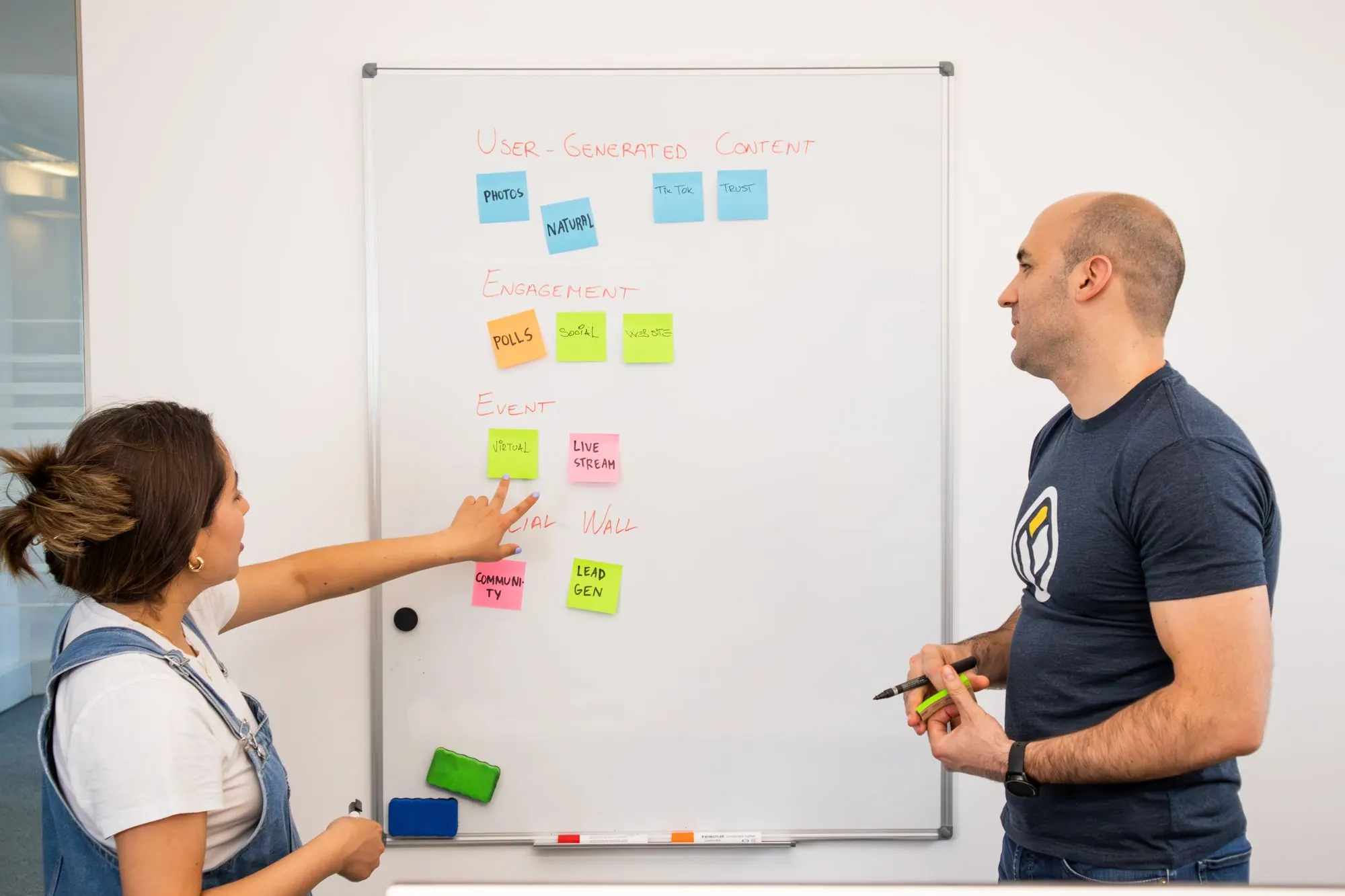
Two colleagues planning at a whiteboard covered in sticky notes02

Lists and scripts

We build your ideal customer profile, pull and verify target lists, and write call and email scripts for your market.

Smiling man on a headset call working at a laptop by a window03

Launch

Calls, emails and LinkedIn go live in your prospects’ business hours, under one partner’s watch.

Three colleagues laughing together around a meeting table with laptops and charts04

Weekly report

Every week you see calls made, conversations held and meetings booked, straight from the CRM.

Before Trifecta

Done before, for US companies

Before Trifecta, Safiya turned inbound marketing-qualified leads into sales-qualified leads at a US business-services firm, the same MQL to SQL work this service runs for you.

Safiya Abdulsalam
Partner track record · before Trifecta

Marketing leads turned into sales-ready leads

At a US business-services firm, Safiya sat between marketing and sales. Inbound marketing leads came in; she called them, qualified them on need and fit, and passed only sales-ready leads, with notes, to the sales reps. The rest were logged and nurtured.

MQL to SQL conversionQualification before handoffClean CRM records

Led by Safiya Abdulsalam →

Trifecta is a new agency. These are the partners’ own past roles, shared with their permission and without naming the employer. See the full track record.

Packages

Pick a starting point

Growth SDR fits best if you want list building and steady qualification across calls, email and LinkedIn; owners who mainly need booked, BANT-checked meetings can start on Pipeline Starter.

Pipeline Starter

For owners who need booked meetings now

  • Appointment setting by cold calling
  • BANT-qualified meetings on your calendar
  • Weekly report
Compare packages →
Best fit for this page

Growth SDR

For teams ready for steady outbound

  • A dedicated SDR
  • Calls, email and LinkedIn
  • List building and script testing
  • Every touch logged in your CRM
Compare packages →

Full Revenue Team

For companies building a sales function

  • Everything in Growth SDR
  • CRM setup and sales automation
  • Reporting dashboard
Compare packages →
Questions

What buyers ask us first

Do you provide the leads or do we?

Either. We can build lists from scratch in Apollo.io or your data tool, work your inbound leads, or both. Most clients start with both, so inbound gets fast follow-up and outbound fills the gaps.

Won't asking about budget scare prospects off?

Not when it is asked well. We ask what the problem costs today and whether money is set aside to fix it. Buyers with a real project answer that easily. The ones who bristle usually weren't going to buy.

How do you know who has authority in a company?

We research the org before we call, then ask who else would weigh in. If we are talking to an influencer, we ask for an introduction to the person who signs and log both contacts.

What happens to leads that don't qualify?

They get a reason code and a follow-up date in your CRM. A lead that says "not until next quarter" is still worth a call next quarter. You keep all the data.

Can we change the qualification rules later?

Yes. We review the rules with you on the weekly report. If your closer says a type of lead isn't closing, we tighten that rule the next week.

Do you use BANT or something else?

BANT is the base because it is fast and easy for everyone to understand. For bigger deals we add questions about the approval process and success metrics, borrowed from frameworks like MEDDIC.

Which CRM do you work in?

Yours. The team has worked in HubSpot, Salesforce, GoHighLevel and Zoho. BANT fields, notes and call outcomes go straight into your records. If you don't have a CRM, see our CRM setup service.

Book a strategy call

Want fewer, better meetings?

Book a strategy call. We'll look at your current leads, agree on what qualified means for you, and show you how we'd run it.

  • 01We look at your offer, deal size and ideal buyer.
  • 02We tell you which channel and package fits, and what volume to expect.
  • 03You get a written quote. No pressure.

We reply within one US business day. No spam, no sharing your details. Privacy

Book a strategy call →